The Execution Gap in Modern Sports Marketing
Despite all the dashboards, teams still can’t see what matters.
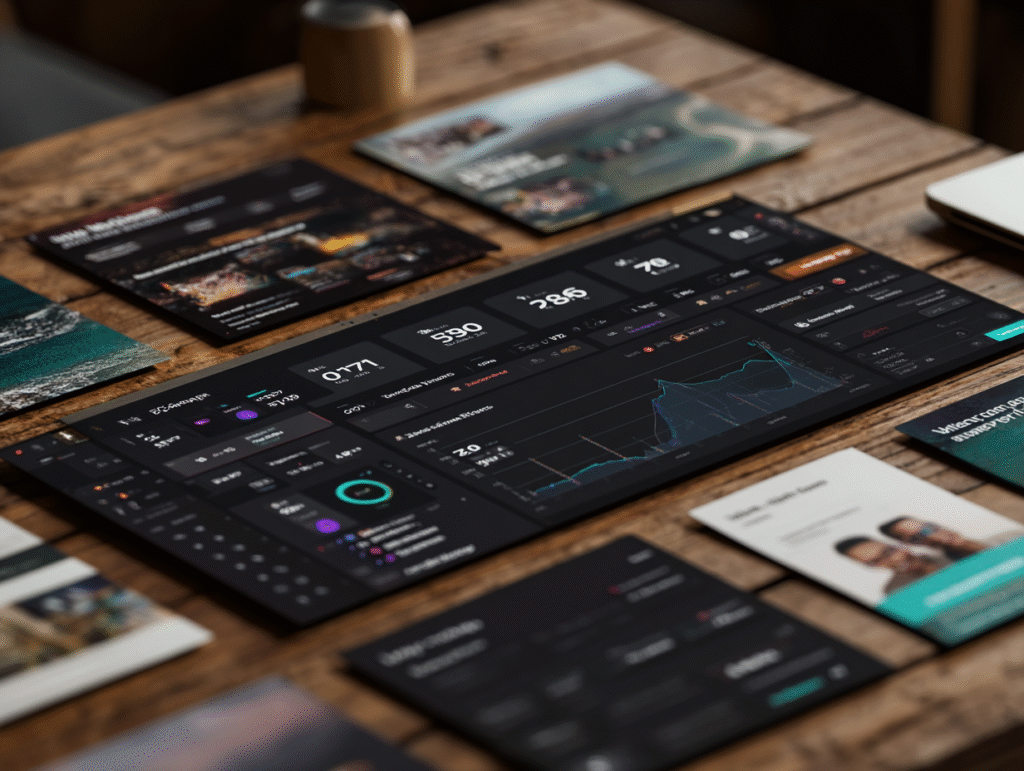
Over the past decade of working closely with dozens of sports organizations, I’ve repeatedly seen a consistent pattern: executives with million-dollar analytics platforms consistently make the same fundamental mistake: confusing trend awareness with execution capability. The modern sports organization has unprecedented access to fan data, technology platforms, and marketing resources — yet most remain structurally misaligned with what today’s fans actually expect.
The challenge isn’t identifying emerging trends. Teams are inundated with reports and consultants telling them what’s changing. The execution gap happens where organizational structures, approval processes, and legacy measurement systems create insurmountable barriers to adaptation.
As we navigate deeper into 2025, the divide is widening between organizations that merely recognize changing fan behavior and those rebuilding their operational foundations to capitalize on these shifts. Let’s examine the five definitive trends reshaping sports marketing — and more importantly, why most teams are structurally unprepared to execute against them.

Trend 1 – Your “Personalization” Is Actually Just Mail Merge With a Bigger Budget
Beyond Basic Segmentation
Let’s be honest about what most teams call “personalization” in 2025: it’s still just sending different email subject lines based on whether someone’s a season ticket holder or not. Maybe you’ve graduated to different push notifications for different demographic buckets. That’s not personalization — that’s just mail merge with fancier technology.
True personalization requires adaptive systems that respond to individual behavior patterns in real-time, not just demographic categories assigned months ago. It means tracking:
- Which specific players each fan engages with most
- What content formats they consistently prefer (highlights vs. interviews vs. stats)
- When they typically engage with your platforms
- How they navigate through your digital properties
In our work with sports clients, we’ve seen that teams implementing genuine behavior-based personalization consistently see dramatic improvements in engagement compared to those stuck in basic segmentation models.
The Execution Failure: App & Ticketing UX
Where most organizations fall catastrophically short is in connecting their data collection systems with their content delivery infrastructure. The pattern is frustratingly consistent:
- Analytics teams build beautiful dashboards showing fan behavior patterns
- Content teams produce assets based on editorial calendars and department needs
- No automated system connects these functions in real-time
- No one has authority to break departmental silos
This execution gap explains why most team apps still deliver essentially identical experiences to users despite having mountains of data that could drive personalization. The technical capability exists in virtually every organization we’ve worked with — what’s missing is the organizational structure to implement it.
Implementation Checklist:
- Audit your fan data collection across all platforms (what behavioral signals are you capturing but not using?)
- Map your content tagging system (can content be dynamically delivered based on behavior?)
- Identify the organizational walls between analytics and content production teams
- Establish who has authority to create cross-functional processes
- Create feedback loops that continuously refine personalization algorithms based on results

Trend 2 – While You’re Perfecting That Tweet, The Moment Already Passed
The Real-Time Imperative
We’ve all heard these phrases in sports organizations: “We need legal to review this.” “Marketing hasn’t approved that messaging.” “Let’s run this by the VP first.”
These are the death knells of relevance in digital culture. The energy drains from a room as a perfectly timed post sits in approval purgatory while the cultural moment it was meant for fades into irrelevance.
Most sports marketing departments still operate on content calendars designed for a pre-social media era. Approval processes requiring multiple departmental sign-offs make real-time cultural participation nearly impossible.
Content velocity—the speed from concept to publication—has become a critical competitive advantage. When a cultural moment happens, fans expect immediate team participation, not a polished response two days later.
Forward-thinking organizations have implemented rapid content approval systems that minimize time between concept and publishing for trending topics. Our agency partners who’ve made this shift consistently see higher engagement rates compared to their more deliberate, production-heavy approaches.
TikTok: The Case Study in Agility
TikTok provides the perfect example of how content velocity drives engagement. The platform’s algorithm rewards immediacy and cultural relevance over production quality. Teams winning on TikTok aren’t those with the biggest production budgets—they’re the ones structurally organized to participate in trends as they emerge.
In our strategy work, we’ve found that teams with streamlined approval processes for social content consistently demonstrate higher engagement rates on platforms where timeliness often outweighs production value. It’s not about having better creators—it’s about removing the structural barriers to rapid execution.
Key Velocity Blockers to Eliminate:
- Multi-level approval requirements for standard content
- Undefined publishing authority during time-sensitive moments
- Excessive brand guidelines that prioritize consistency over relevance
- Disconnected tools between content creation and distribution
- Risk-averse organizational culture that punishes experimentation
Trend 3 – Random Content Isn’t Storytelling—It’s Just Noise
Building Narrative Architecture
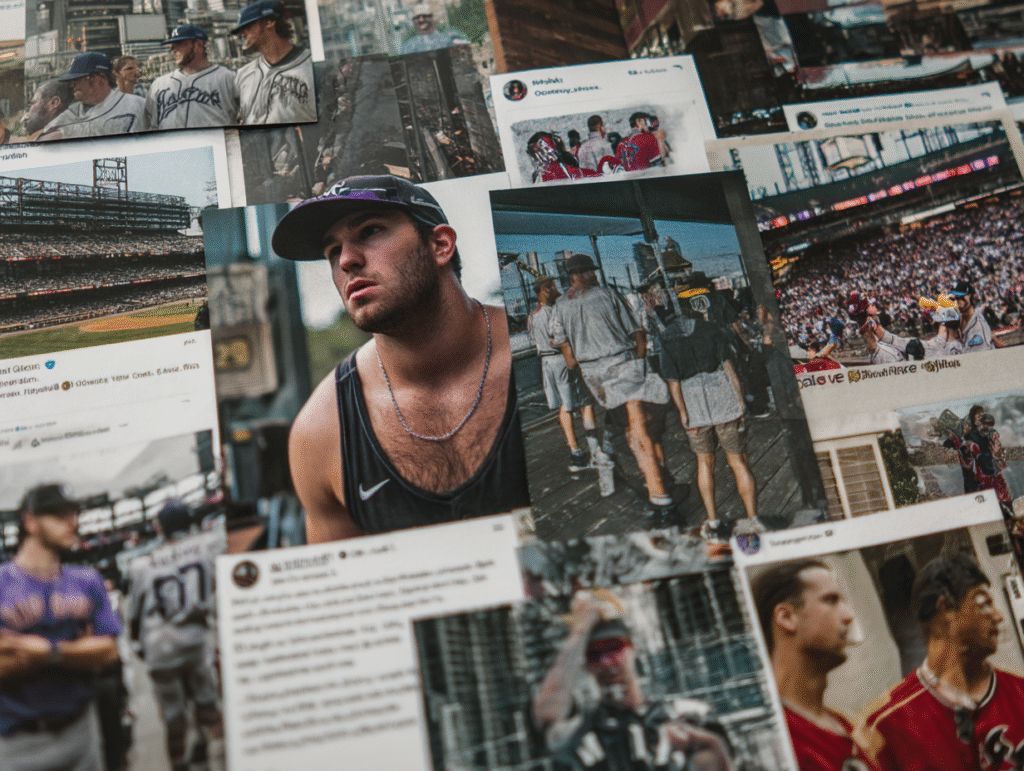
Most major league teams’ Instagram feeds show a familiar pattern: a game highlight, a community event photo, a sponsored post, a player birthday graphic, and a ticket promotion—five completely disconnected pieces of content with no throughline, no narrative arc, and no reason for a fan to come back tomorrow.
This scattershot approach isn’t storytelling—it’s digital noise. And unfortunately, it’s the default mode for most sports organizations.
The reality is that fans don’t follow content calendars or departmental needs. They follow emotional threads, character arcs, and evolving narratives. When organizations produce disconnected content driven by departmental checkboxes rather than narrative continuity, they’re asking fans to do the impossible work of finding meaning in chaos.
Systemic storytelling requires building narrative architecture that connects seemingly disparate content into meaningful journeys. In our client work, we’ve seen engagement metrics transform when organizations do one simple thing: start with story frameworks instead of platform requirements. When a content calendar begins with narrative arcs rather than “we need three Instagram posts per day,” it naturally creates experiences that pull fans through a journey.
Player-Driven Narrative Systems
Player-centric storytelling provides the most natural foundation for systemic approaches. Organizations that restructure their content teams around player narratives rather than platform requirements consistently see stronger fan engagement and higher multi-platform journey completion rates.
In repeated consulting cases, we’ve found that narrative-driven content strategies deliver significantly higher engagement than traditional platform-specific approaches. The difference isn’t just in engagement numbers—it’s in the quality of fan connection and the predictability of their return behavior.
Systemic Storytelling Implementation:
- Develop season-long narrative frameworks before creating individual content
- Structure content teams around narratives rather than channels
- Create connective elements (visual systems, language patterns, recurring formats) that link separate content pieces
- Establish measurement systems that track narrative journey completion, not just individual content performance
- Prioritize continuity in planning meetings over isolated campaign ideas
Trend 4 – Stop Calling It Fan Engagement If You’re Not Listening
From Activation Events to Community Systems
“Fan engagement” has become the emptiest phrase in sports marketing. Teams plaster it across department names and strategic plans while fundamentally misunderstanding what engagement actually means.
Here’s the hard truth: engagement isn’t something you do to fans. It’s something fans do with you—if you build systems that make it worthwhile.
In our consulting work, we regularly encounter “fan engagement strategies” that are really just calendars of one-way “activations” designed to generate momentary enthusiasm. Rarely do these plans include mechanisms for fans to meaningfully participate, contribute, or influence the team’s digital presence.
This isn’t just conceptually wrong—it’s commercially self-destructive. Today’s fans have been conditioned by streaming platforms, social media, and gaming to expect immediate response, validation, and impact. When an “engagement” strategy treats them as passive receivers rather than active participants, it’s fighting against the cultural current.
The most successful teams are building what we call “response frameworks”—systematic approaches to fan participation that include:
- Voting mechanisms with visible impact
- Co-creation opportunities
- Responsive content that acknowledges fan contributions
- Recognition systems that reward community participation
In our partnerships with forward-thinking teams, we’ve seen that organizations implementing robust fan response systems, where user-generated content can be incorporated into official channels, consistently achieve substantial increases in content sharing and community participation.
Meeting Fans in Their Cultural Context
Streaming and meme culture have fundamentally changed fan expectations. Participation, reaction, and validation are now core elements of content consumption. Teams must build consistent frameworks that turn passive viewers into active community members.
This shift requires moving beyond treating social platforms as broadcast channels and instead viewing them as community infrastructure.
Community System Components:
- Reaction frameworks that capture and showcase fan responses
- Clear submission processes for fan-generated content
- Recognition mechanisms that acknowledge community contributions
- Consistent participation opportunities (not just occasional “activations”)
- Staff roles specifically focused on community nurturing rather than content broadcasting

Trend 5 – Your Revenue Obsession Is Actually Destroying Fan Value
The Retention Imperative
“What’s the ROI?”
This question echoes through every strategy meeting, and it reveals a fundamental misunderstanding. Not because ROI doesn’t matter, but because the timeline most organizations use to measure it is dangerously short-sighted.
The fixation on immediate revenue metrics has created a critical blind spot. Teams optimize for this weekend’s ticket sales, this month’s merchandise revenue, and this quarter’s concession numbers while systematically undervaluing the behaviors that actually predict long-term fan value.
In our advisory work, we’ve seen organizations slash community-building initiatives because they couldn’t directly attribute ticket sales to them within a short window. Teams abandon storytelling frameworks because they don’t drive immediate merchandise conversions. And executives kill digital community features because they can’t justify the development cost against next month’s revenue targets.
Forward-thinking organizations recognize that engagement frequency—not just transactions—predicts long-term fan value. Teams that prioritize fan retention metrics as leading indicators consistently demonstrate stronger long-term revenue performance than those focused exclusively on immediate conversion.
Beyond Vanity Metrics
This approach requires moving beyond “likes” and surface-level engagement statistics. Sophisticated retention measurement includes:
- Return frequency (how often fans engage across platforms)
- Engagement depth (not just viewing but commenting, sharing, and creating)
- Cross-platform journey completion (following narrative threads across multiple touchpoints)
- Content completion rates (not just impressions but full consumption)
- Community participation (contribution to fan conversations)
We’ve consistently observed in client work that organizations implementing retention-focused KPI systems see significantly higher rates of repeat ticket purchases and sustained fan engagement compared to those prioritizing traditional conversion metrics.
Retention Measurement Framework:
- Establish fan journey mapping to identify key touchpoints
- Implement cross-platform tracking systems
- Define engagement quality metrics beyond volume statistics
- Create predictive models connecting engagement patterns to long-term value
- Realign incentive structures to reward retention indicators, not just immediate sales

Conclusion: Structural Shifts, Not Marketing Tweaks
These five trends represent fundamental shifts in how sports organizations must structure themselves to remain relevant. The gap between awareness and execution isn’t about understanding—it’s about organizational design.
In working with dozens of sports organizations, one pattern is clear: most are still built to execute campaigns, not design journeys. Their org charts, meeting structures, and incentive systems reflect a media landscape that no longer exists. They’re structurally misaligned with what modern fans expect, regardless of how many trend reports they consume.
The teams pulling ahead aren’t just updating their content strategies—they’re rebuilding their operational foundations. They’re tearing down walls between analytics and content teams. They’re flattening approval hierarchies. They’re reorganizing around narrative systems rather than channels. They’re measuring behaviors that predict lifetime value rather than immediate conversions.
The critical question for any sports executive isn’t which trends you recognize—it’s which of them you’re actually willing to structurally address. If you’re still stuck in a 2022 playbook, which of these can you structurally fix this quarter?
Because while you’re planning next season’s marketing calendar, your fans are already moving on to organizations that understand: it’s not what you know about the future that matters—it’s what you’re willing to rebuild to get there.
About the Author
Chandler Kim is the founder of Bizball Group, a sports marketing agency that helps U.S. professional teams connect with Asian fanbases through digital strategy, data-driven content, and global fan engagement frameworks.